Repair, Refresh, Refurbish, Replace
When something goes wrong in your home, you deserve honest answers, clear options, and lasting solutions. At Albuquerque Plumbing, Heating & Cooling, we follow the four R’s: Repair, Refresh, Refurbish, and Replace.
These four options show what needs attention now, soon, and for the long term. Sometimes a repair is best. Other times, it makes sense to refresh old parts, refurbish equipment, or replace a system at the end of its life.
We help you decide with confidence. We explain our findings, give practical recommendations, and focus on solutions that fit your home, needs, and budget.
- Repair focuses on the immediate problem that brought us to your home.
- Refresh gives you professional recommendations to improve reliability and plan ahead.
- Refurbish restores existing equipment when it can be safely and affordably renewed.
- Replace provides a dependable long-term solution when repair is no longer the best investment.
What the Four R’s Mean for Your Home
Your home depends on plumbing, heating, cooling, and electrical systems every day. When one of those systems stops working properly, the right solution is not always obvious. A leaking pipe may need a simple repair or indicate aging plumbing. A cooling issue may stem from a single failed part or be a sign of declining system performance.
That is why the four R’s matter. They give homeowners a simple way to understand the different service levels available and why one recommendation may make more sense than another.
- We identify the issue that caused you to call.
- We look at the condition of the equipment or system involved.
- We explain whether the problem is isolated or part of a larger concern.
- We help you compare the costs and benefits of repair, refurbishment, or replacement.
Repair: Solving the Problem That Brought Us There
Repair is the first priority when your home has an active plumbing, heating, cooling, or electrical problem. If you called because something is leaking, clogged, broken, tripped, noisy, unsafe, or not working, our goal is to diagnose the issue and restore proper function.
A repair may involve fixing a leak, clearing a drain, replacing a failed part, restoring power to a fixture, getting a water heater working again, repairing a furnace, or bringing an air conditioner back to proper cooling performance.
- Plumbing repairs may include leaks, clogs, fixtures, water heaters, drains, or piping issues.
- Heating repairs may include furnaces, heat pumps, boilers, ignition parts, airflow problems, or failed controls.
- Cooling repairs may include air conditioners, swamp coolers, thermostats, capacitors, motors, or refrigerant-related issues.
- Electrical repairs may include tripped circuits, faulty wiring, outlets, switches, fixtures, panels, or unsafe connections.
Repair is often most practical when a system still has useful life. If the equipment is in reasonable condition and repair restores reliable operation, we will recommend it. We aim to solve problems effectively and help you feel confident in your decision.
When Repair Makes the Most Sense
Repair is usually the right path when the issue is isolated, the equipment is not near the end of its expected life, and the repair cost is reasonable compared with the system’s value.
- The system has been reliable until this recent problem.
- The affected part can be repaired or replaced safely.
- The cost of repair is well below the cost of replacement.
- The repair is likely to restore dependable performance.
Refresh: Professional Recommendations for Long-Term Reliability
A Refresh means our technician checks related equipment and explains anything that could affect future performance, safety, or reliability. You decide what work, if any, is approved.
This is where our “In My Professional Opinion” approach comes in. Based on experience, system condition, manufacturer guidance, and good trade practice, we may point out items that are aging, worn, outdated, inefficient, or likely to create problems later.
- An aging water heater may still be working, but is showing signs of wear.
- A plumbing fixture may function, but have deteriorating seals or corrosion.
- An HVAC system may run but struggle due to restricted airflow or worn parts.
- An electrical component may still operate, but no longer meets the safety level your home needs.
Our recommendations inform you. We explain what we see, the risks of ignoring issues, and your options. You control the next steps.
What a Refresh Can Help Prevent
A Refresh can be especially valuable for homeowners who want fewer surprises. Small issues are often easier to address before they cause damage or leave your home without heating, cooling, hot water, power, or proper drainage.
- Unexpected plumbing leaks that damage walls, cabinets, flooring, or ceilings.
- Heating and cooling breakdowns during peak weather conditions.
- Electrical hazards are caused by worn, loose, outdated, or overloaded components.
- Higher utility costs are caused by inefficient equipment or poor system performance.
Refurbish: Extending the Life of Your Existing Equipment
Refurbishing means renewing existing equipment rather than replacing it completely. In many cases, a plumbing, HVAC, or electrical system may have parts that are worn while the main equipment still has useful life left. Refurbishment can be a smart middle ground when a basic repair is not enough, but replacement is not yet necessary.
This restores performance, reliability, and value. It may include cleaning, rebuilding, rewiring, or changing parts that affect operation.
- Plumbing refurbishment may include rebuilding valves, replacing internal components, or restoring fixture function.
- Water heater refurbishment may include replacing elements, thermostats, valves, or other serviceable parts.
- HVAC refurbishment may include replacing motors, blower parts, capacitors, contactors, ignitors, or controls.
- Electrical refurbishment may include restoring connections, replacing worn devices, or upgrading critical components.
Refurbishment is not always right. Our technicians assess condition, age, safety, part availability, and cost first. When appropriate, it restores comfort and reliability while delaying bigger investments.
When Refurbishment Is a Good Option
Refurbishment works best when the equipment has a solid foundation but needs targeted renewal. It can be especially helpful for systems that are neither new nor ready to be removed and replaced.
- The system is still structurally sound and safe to operate.
- The needed parts are available and worth installing.
- The cost is reasonable compared with full replacement.
- The work can meaningfully improve performance or reliability.
We believe in maximizing the value of what you already have when it is safe and practical to do so. If refurbishment delivers a reliable result, we will explain that option. If it only delays a bigger problem for a short time, we will tell you that too.
Replace: Investing in a Reliable Long-Term Solution
Replacement becomes the best option when an existing system is no longer safe, reliable, efficient, or cost-effective to keep repairing. At some point, repeated service calls and aging equipment can cost more than adopting a modern solution.
Replacing a system is a bigger decision, so it deserves a clear explanation. Our technicians discuss what is failing, why replacement may be recommended, the available options, and how each option may affect comfort, safety, efficiency, and long-term value.
- Water heaters, tankless water heaters, plumbing fixtures, or piping systems.
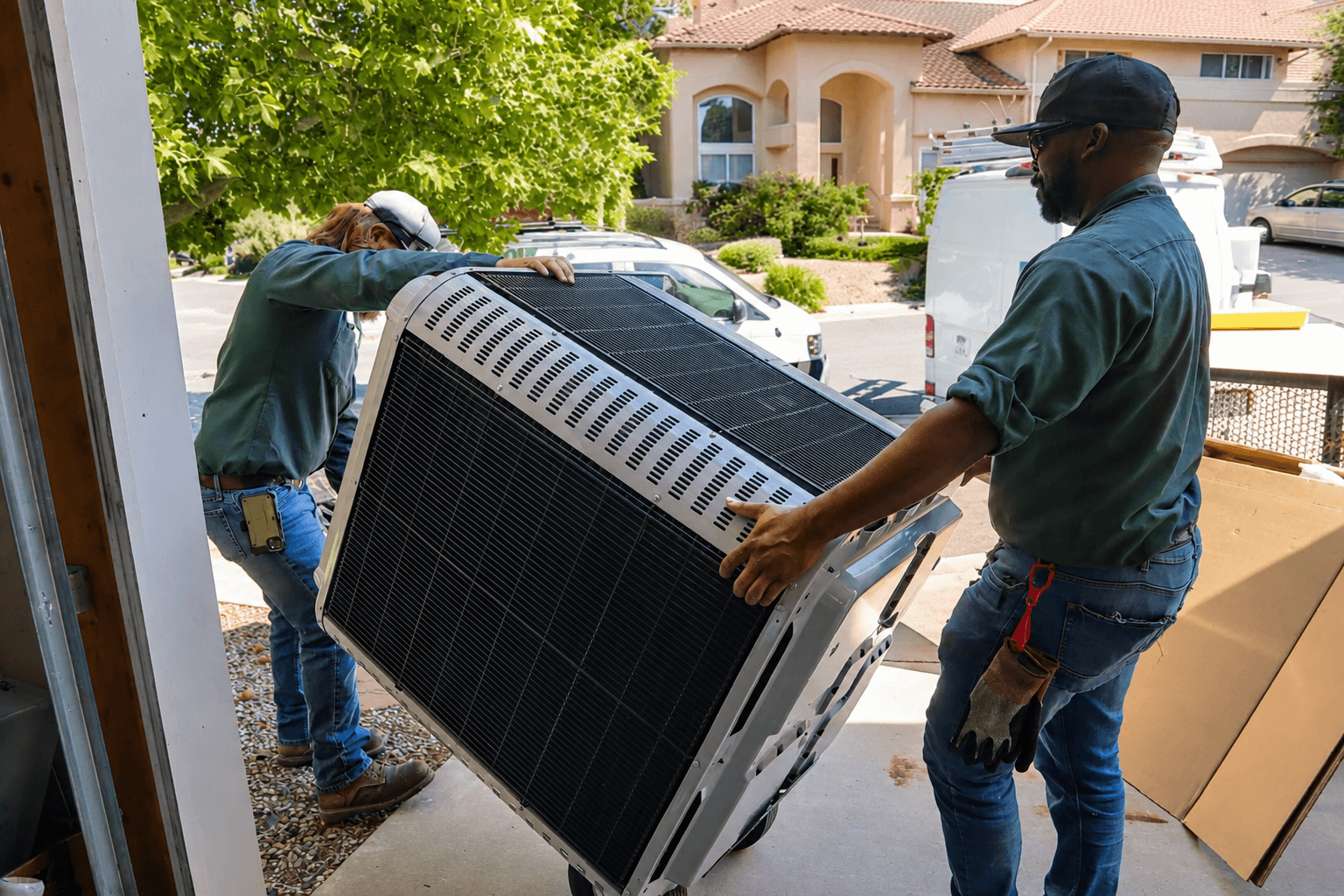
- Furnaces, air conditioners, heat pumps, boilers, or swamp coolers.
- Electrical panels, wiring, outlets, switches, generators, or fixtures.
- Major system components that are unsafe, outdated, inefficient, or no longer dependable.
Modern equipment can offer better performance, stronger efficiency, improved safety features, and manufacturer warranty protection. More importantly, the right replacement can give your household peace of mind that the system will serve your home for years to come.
Signs Replacement May Be the Better Choice
Replacement is not just about age. Repair history, performance, safety, and cost all matter. If your system is reliable, replacement can wait. If it is expensive to maintain, it may be time for something new.
- The system often breaks down or requires repeated repairs.
- The repair cost is close to the cost of replacement.
- The equipment is inefficient, unsafe, outdated, or difficult to service.
- The system no longer keeps your home comfortable or functional.
How We Help You Choose the Right Option
The four R’s are not a sales script. They are a practical way to talk through your options. We know homeowners want straight answers, especially when the issue affects comfort, safety, or daily routines.
- We diagnose the problem and explain what caused it.
- We discuss the current condition of the system involved.
- We separate immediate needs from future recommendations.
- We provide options so you can make an informed decision.
You should never feel left in the dark about work being done in your home. Whether the best answer is repair, refresh, refurbish, or replace, Albuquerque Plumbing, Heating & Cooling stands behind the process and the workmanship.
Call Albuquerque Plumbing, Heating & Cooling
When your home needs plumbing, heating, cooling, or electrical service, call a team that will take the time to explain your options clearly. From simple repairs to full system replacement, Albuquerque Plumbing, Heating & Cooling is here to help you choose the right solution with confidence.
Call now: 505-349-4404
You can also contact us online or find us on Google Maps at Albuquerque Plumbing, Heating & Cooling.